Preparation Guide
Before you begin generating results in Vtryon, it’s important to prepare your inputs correctly. This section explains how to choose the right workflow, organize your garments, and set up clear images for the best output.
What You Can Create in Vtryon
Vtryon supports a wide range of garment types and styling workflows. You can generate outputs for different categories including men’s wear, women’s wear, and kids wear across both ethnic and western styles. This flexibility allows you to manage and create content for multiple product segments within a single platform.
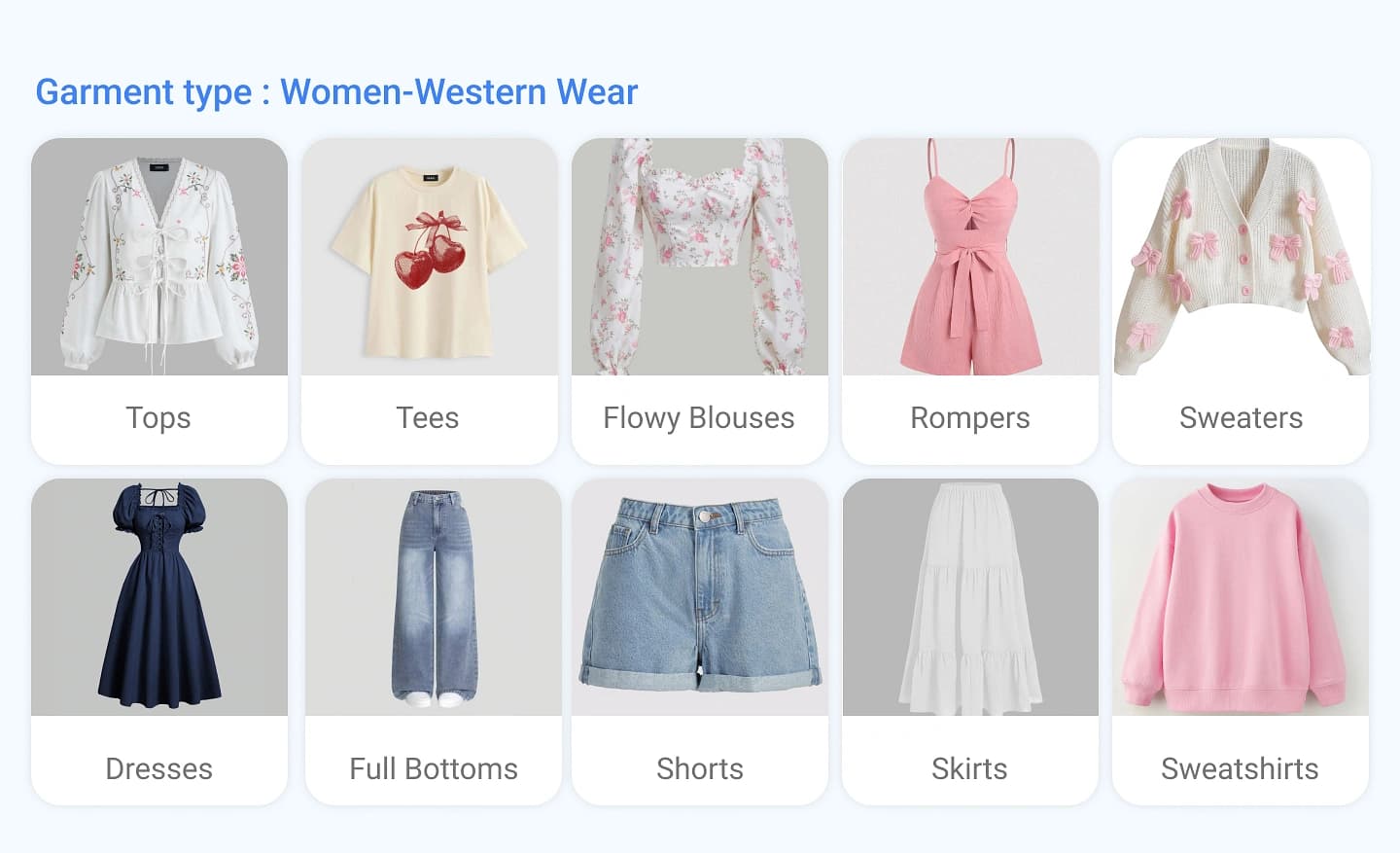
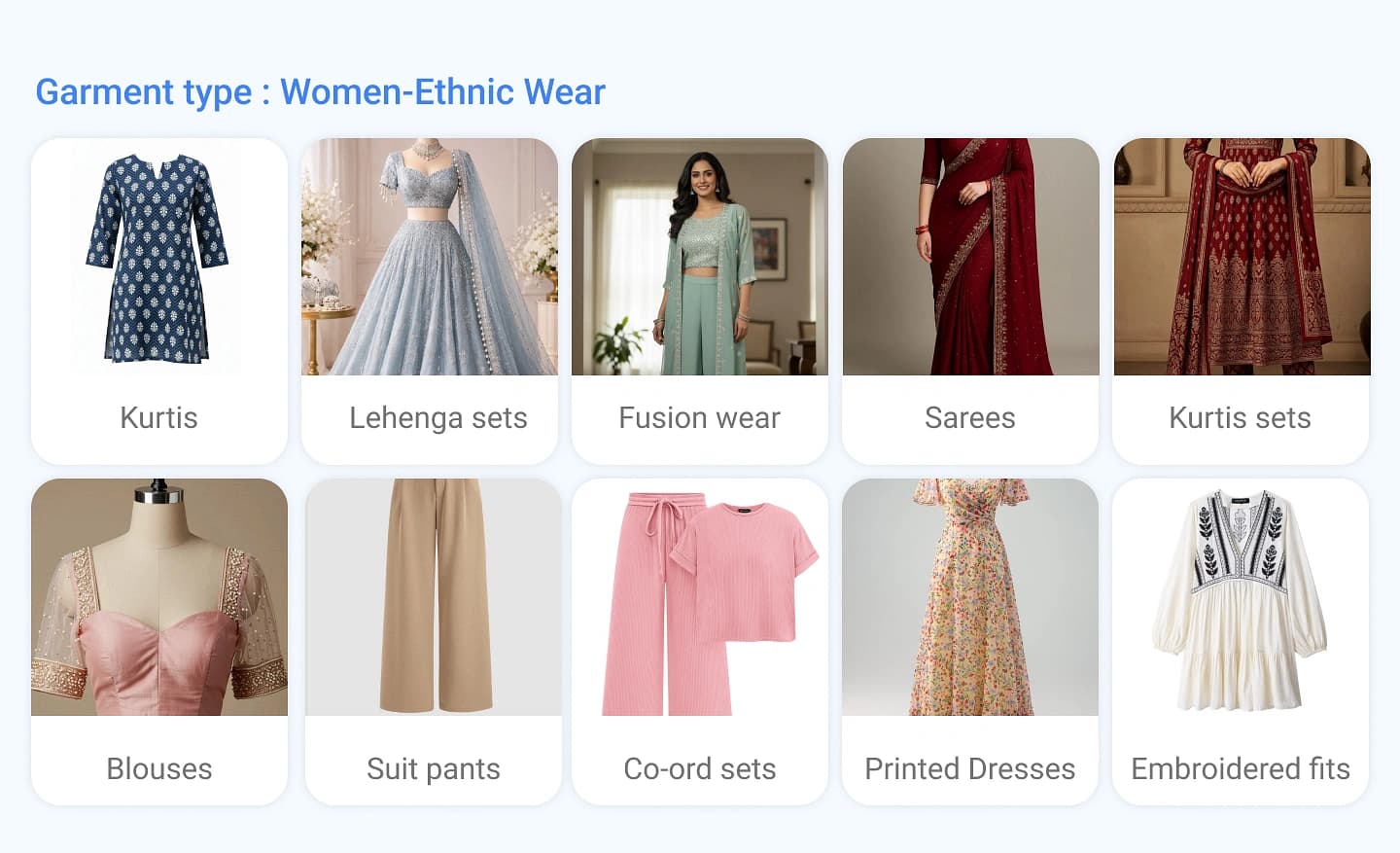
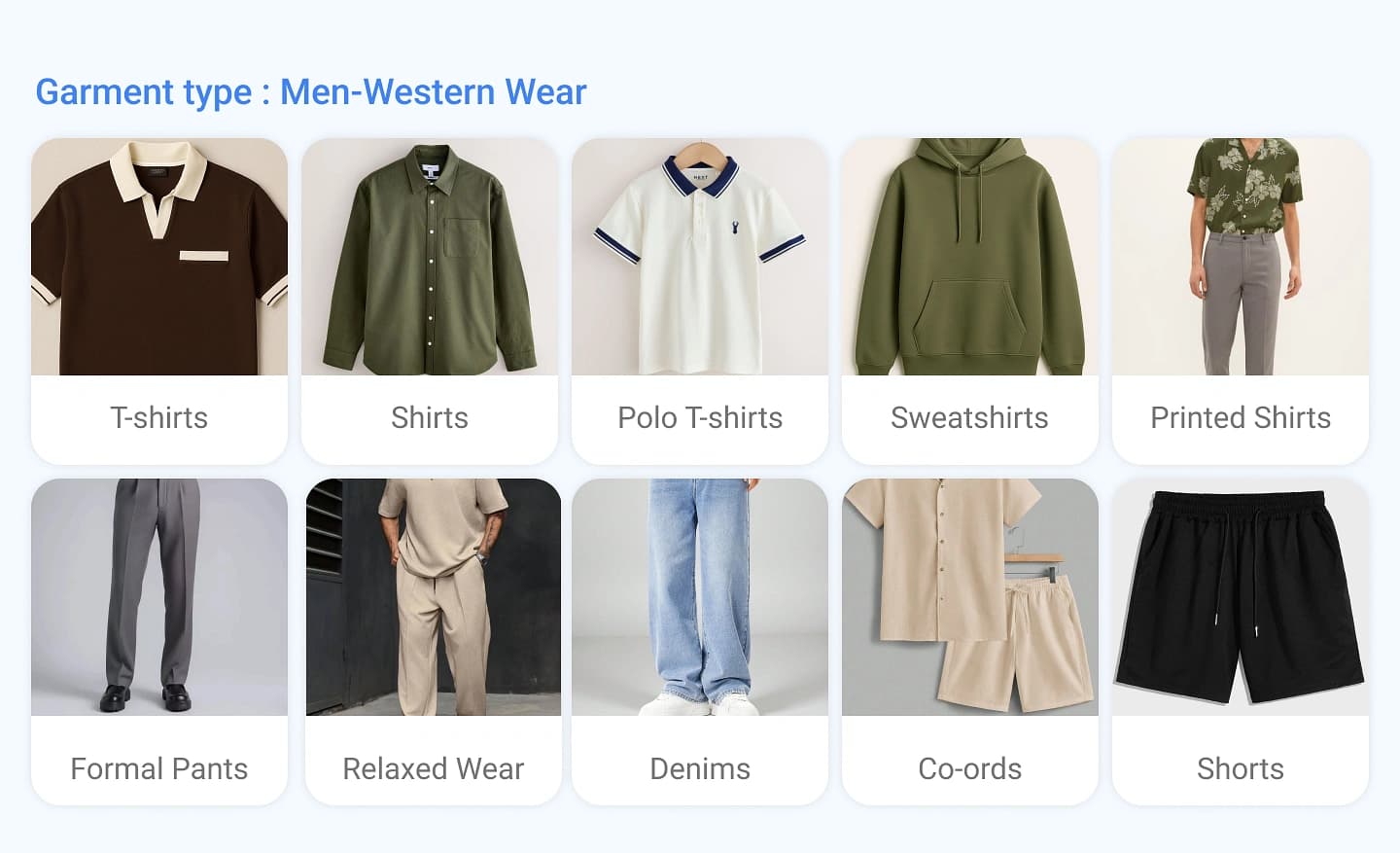
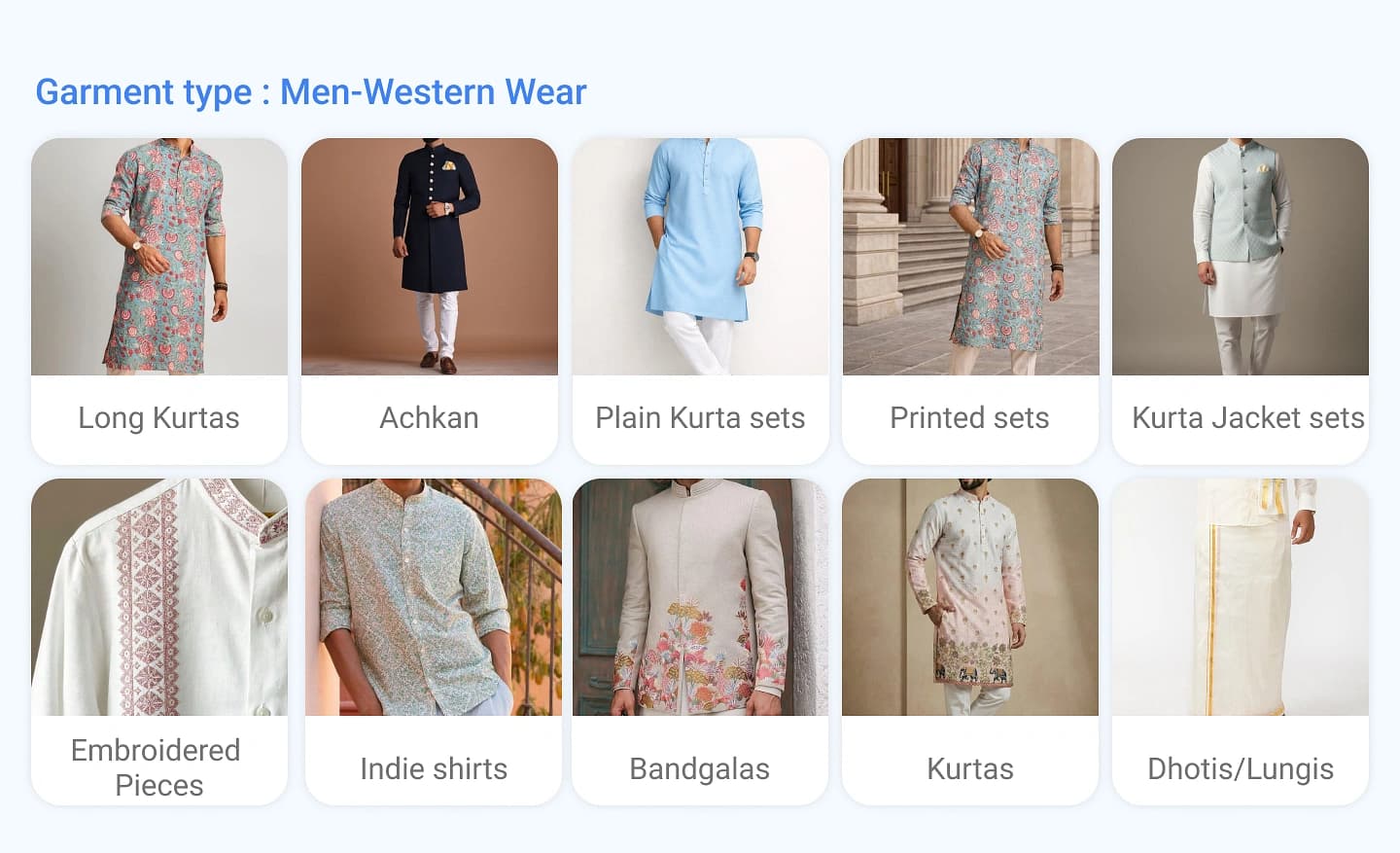
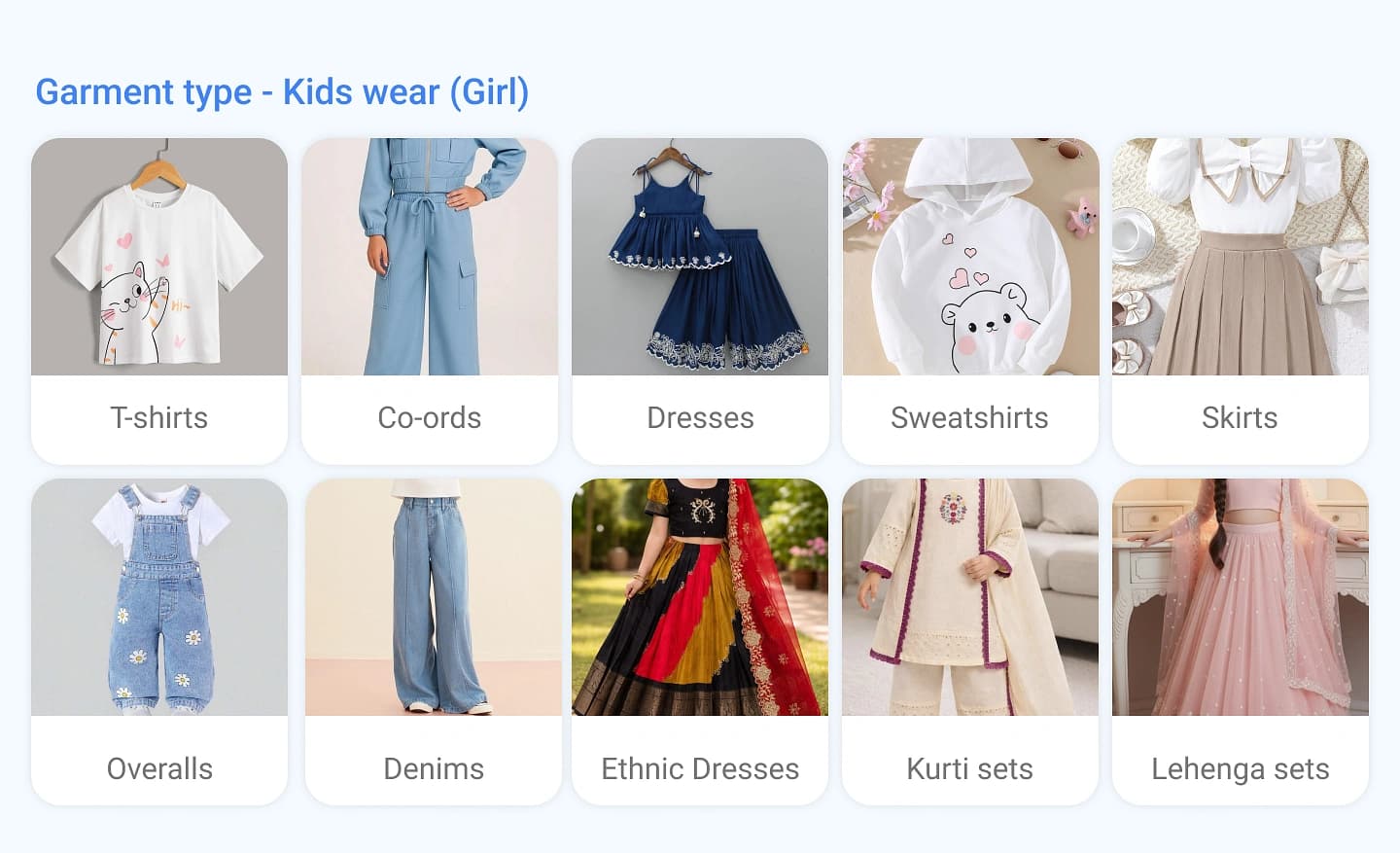
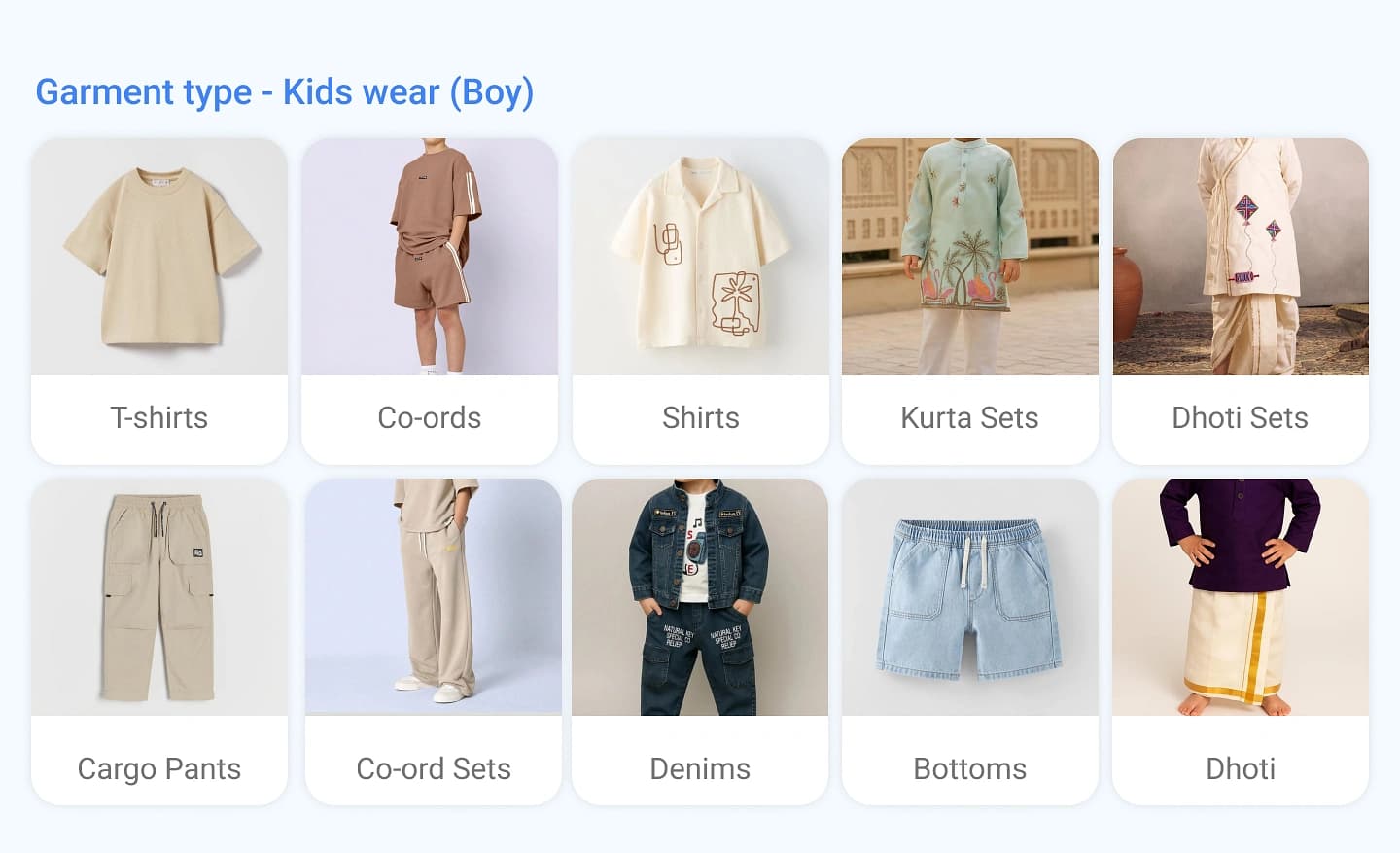
Vtryon also supports custom garment styles beyond standard categories. If you have specific requirements or unique product formats, feel free to reach out to our team at info@legresca.com to check compatibility and get the right setup for your use case.
Recommended Capture Guidelines
While Vtryon supports a wide range of garment categories, the final output quality depends greatly on how the garment is prepared and captured before upload. Certain styles, such as sarees or heavily detailed outfits, may require more careful presentation to achieve accurate results. Review the guidelines below to ensure the best possible output.
Sarees
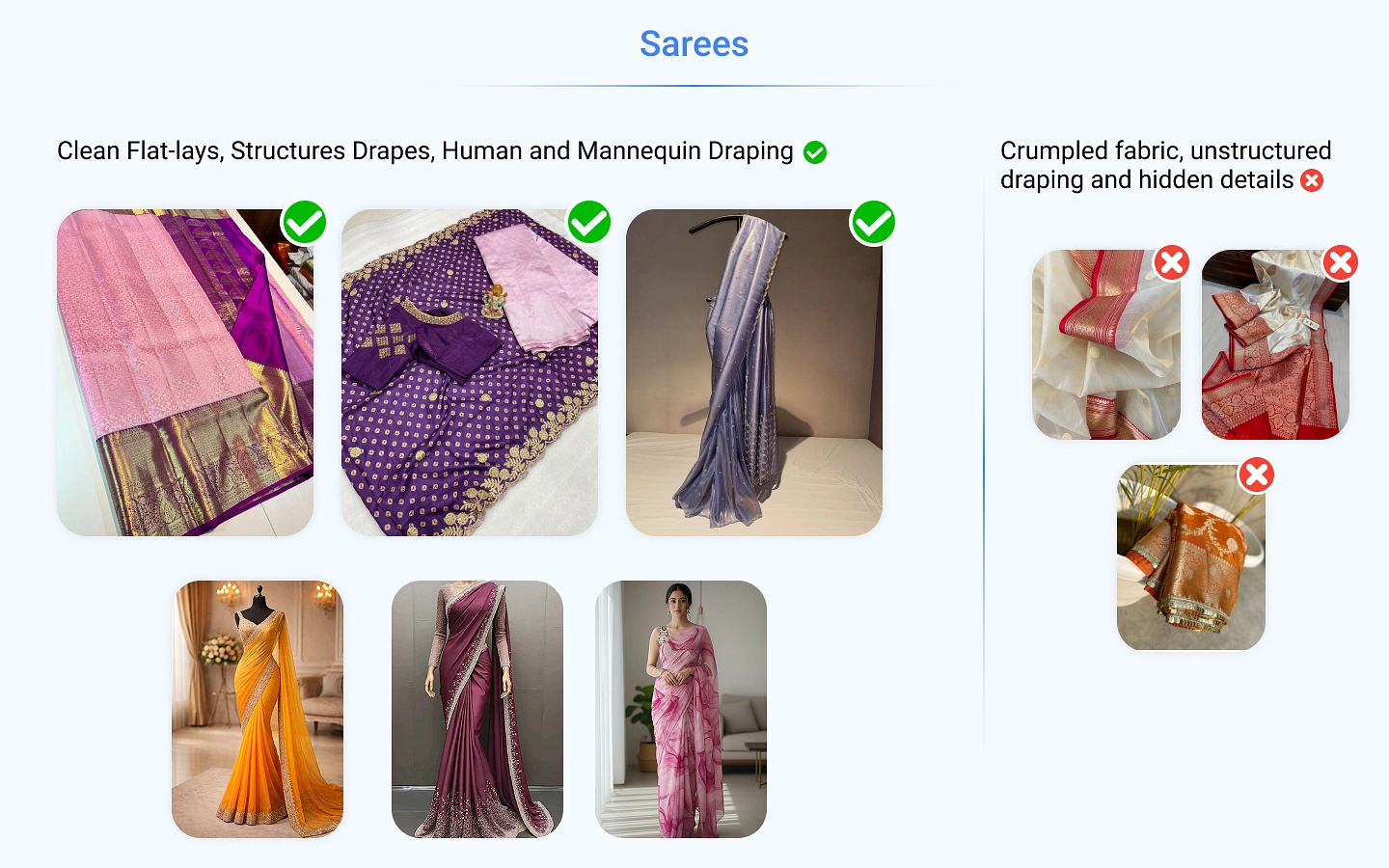
For accurate results, ensure the saree is properly arranged with the drape clearly visible. Key elements like pleats, borders, and overall flow should be easy to identify so the output closely reflects the original design.
✅ DOs
- Capture the saree in a properly draped form, either on a mannequin or a model
- Make sure key details like pleats, pallu, and borders are clearly visible
- Keep the fabric smooth, well-arranged, and free from wrinkles
- Ensure the full structure of the saree is easy to understand
❌ DON'Ts
- Avoid images where the saree looks crumpled, twisted, or poorly arranged
- Do not upload incomplete views or partially visible sarees
- Avoid flatlays that do not clearly show the drape and fall
- Do not use images where important details are hidden
Flowy Garments (Lehengas, Anarkalis, Gowns)
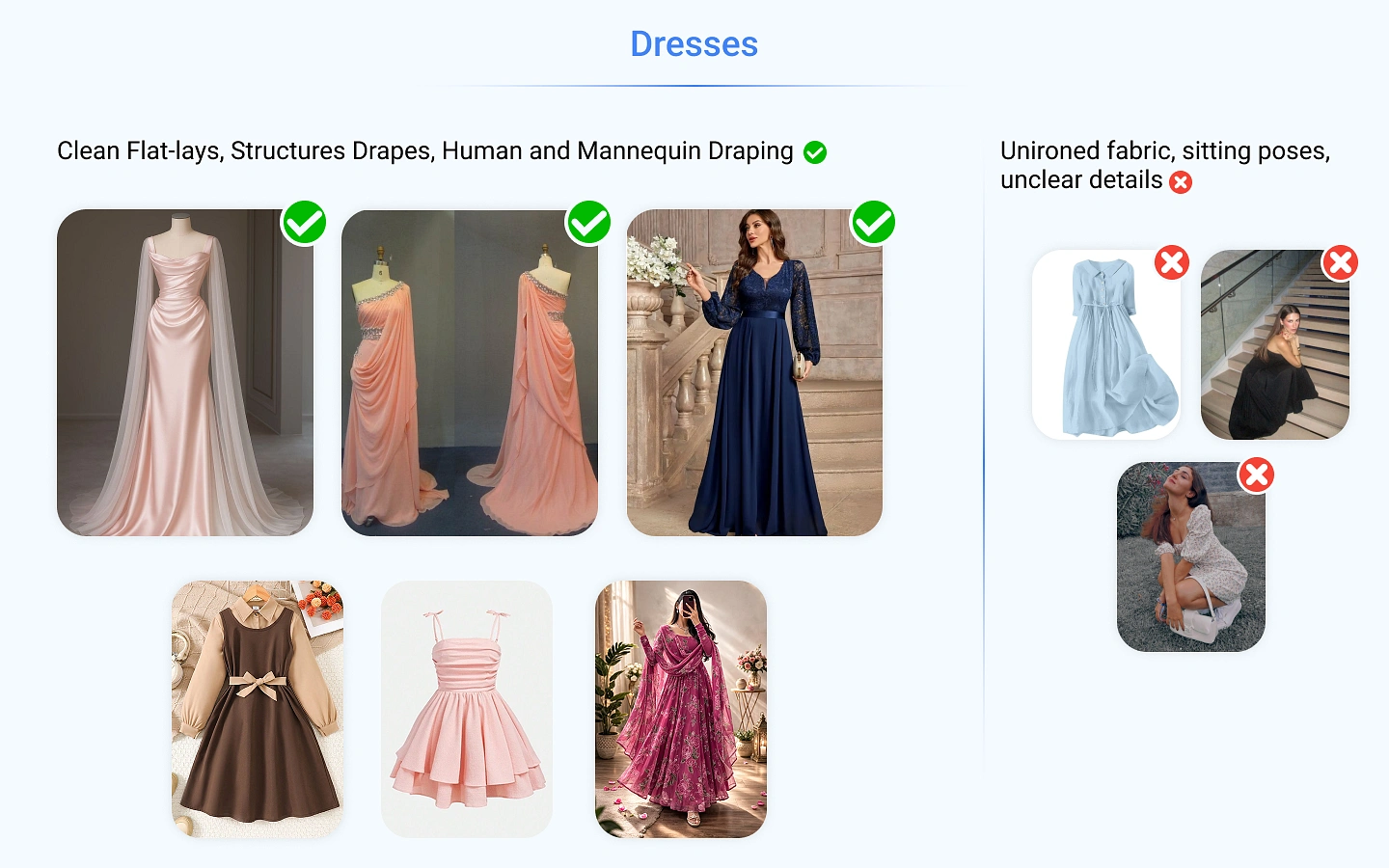
Flowy garments like dresses, gowns, anarkalis, and flared outfits should be arranged to clearly show their natural fall and movement. Ensure the fabric is spread neatly so the overall shape and flare are easy to understand.
✅ DOs
- Use properly draped garments on a mannequin or worn by a model
- Ensure the full flare, sleeves, and key design details are clearly visible
- Arrange the fabric neatly so the natural flow is easy to understand
- Keep the garment clean, smooth, and wrinkle-free
❌ DON'Ts
- Avoid images with crumpled, twisted, or unironed fabric
- Do not upload cropped or incomplete views of the garment
- Avoid poses that hide sleeves or important design elements
- Do not use images where the flow or shape is unclear
Heavy Detailing
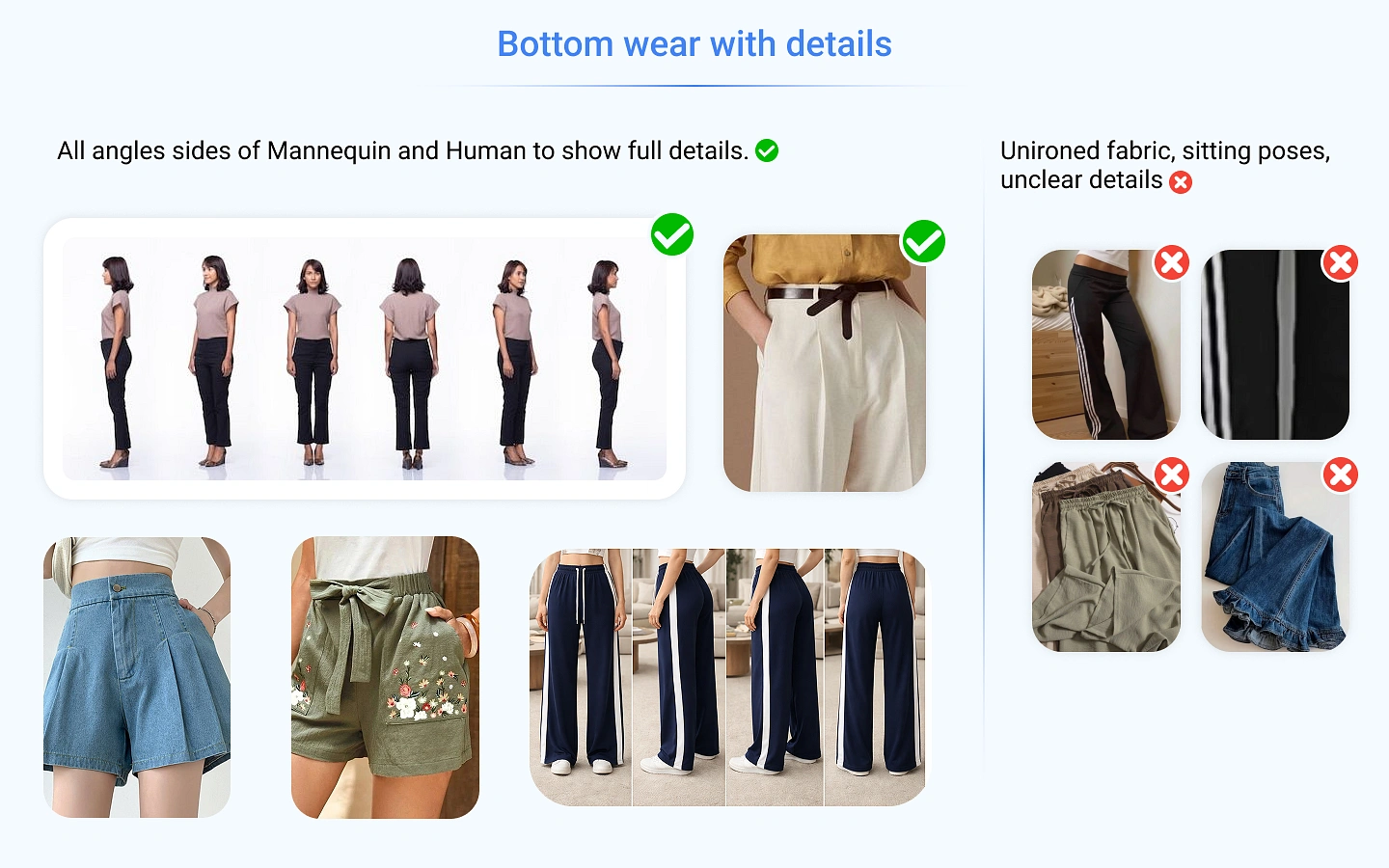
Garments with detailed elements like pockets, zippers, panels, or trims require more than basic views. Capture additional angles to clearly show all structural features so the final output reflects the design accurately.
✅ DOs
- Capture the garment on a mannequin or model with clear front, side, and back views
- Ensure all details like pockets, zippers, seams, and trims are fully visible
- Maintain the garment’s proper shape with a clean, wrinkle-free presentation
- Use lighting that clearly highlights structural elements
❌ DON'Ts
- Avoid using only flatlay images that hide side or back details
- Do not crop out important elements like pockets or seams
- Avoid images with heavy shadows or unclear visibility
- Do not use poorly arranged or distorted garment shapes
Extra Care Garments
Some garments require specific handling due to their complexity. Below are key cases where extra attention is needed for accurate results.
Sarees
Must show the decorative end (pallu) clearly.
Layered Outfits
Separate the pieces if possible or show depth.
Detailing
Zari or heavy embroidery needs macro shots.
Flowing Fabrics
Let the fabric drop naturally for AI analysis.
Fix These Before Uploading
Preparation Done?
Double-check this list before heading to production.
- Garment is ironed and symmetrical
- Model is in an unobstructed front-facing pose
- Lighting is consistent across all shots (Studio preferred)
- Background is solid, neutral, and clean