Why Multi-Pose Garment Images Improve Catalog Quality: A Complete Guide for Fashion E-Commerce
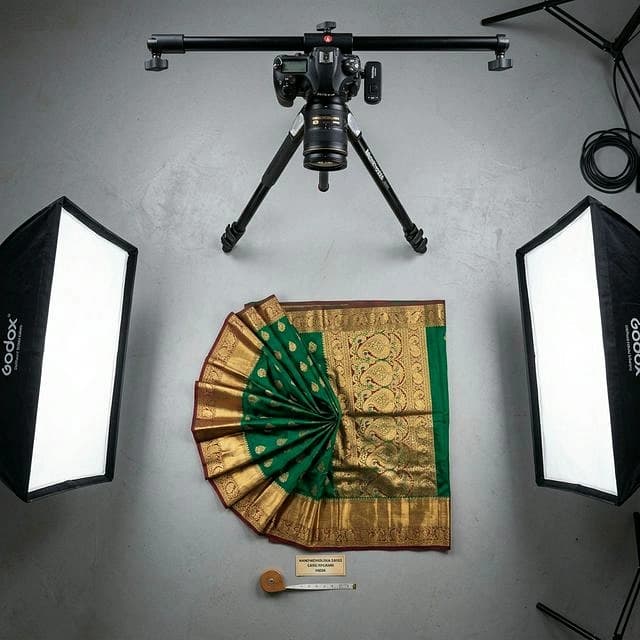
In fashion e-commerce, product imagery is often the deciding factor between a purchase and an abandoned cart. Unlike physical stores where customers can try garments and examine them from different angles, online shoppers depend entirely on visuals to understand how clothing looks when worn.
A single product image may show the design of a garment, but it rarely tells the complete story. Customers want to know how the garment fits the body, how the fabric moves, and how the clothing looks from the front, side, and back.
This is where multi-pose garment images play an essential role.
By presenting clothing from multiple angles and poses, fashion brands provide customers with a more complete understanding of the product. This clarity improves the quality of the catalog, builds trust with shoppers, and ultimately increases the likelihood of a purchase.
For fashion retailers competing in digital marketplaces, multi-pose garment imagery has become a key component of modern product presentation.
Understanding Multi-Pose Garment Images
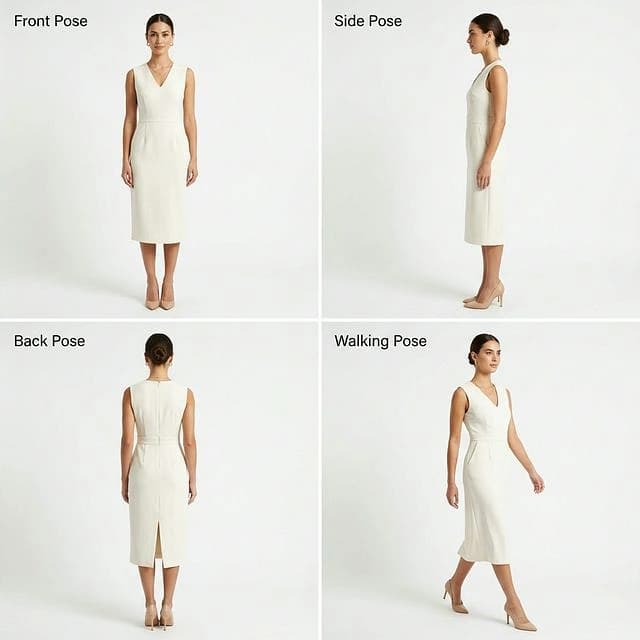
Multi-pose garment images are product photos that display clothing in several poses or viewing angles. Instead of presenting only one static image, retailers show garments through a sequence of images that capture different perspectives.
Typical examples include:
- Front pose
- Side pose
- Back pose
- Walking or movement pose
- Close-up details of the fabric or stitching
This format allows customers to evaluate garments in a way that closely resembles the experience of examining clothing in a physical store.
When shoppers can see multiple perspectives of a garment, they are able to make more informed decisions about fit, style, and quality.
Why Product Imagery Matters in Fashion E-Commerce
- Visual Representation: Images are the only way online shoppers can 'experience' the product.
- Building Trust: High-quality, detailed photos reduce perceived risk for the customer.
- Style Identification: Multiple angles help customers determine if a garment fits their personal style.
- Conversion Influence: Better visuals directly lead to higher add-to-cart rates.
How Multi-Pose Images Improve Catalog Quality
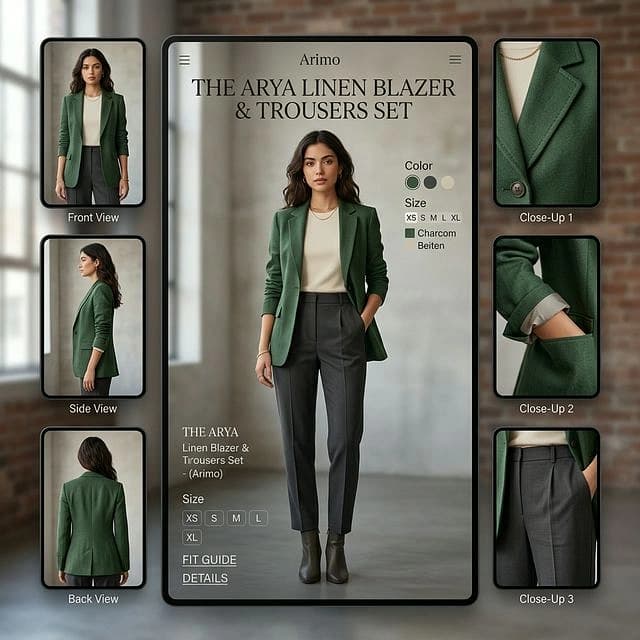
Multi-pose garment imagery improves catalog quality by offering a clearer, more realistic representation of clothing products. Instead of relying on a single photograph, retailers provide a visual narrative that helps shoppers understand garments in detail.
Showing Garment Fit From Multiple Angles
Fit is one of the most important considerations when purchasing clothing online.
A single image rarely communicates how a garment fits across different parts of the body. Customers often want to see how the garment looks from the front, how it falls along the sides, and how the back design appears.
Multi-pose imagery addresses this need by presenting several views of the garment.
This approach allows shoppers to evaluate the overall silhouette of the clothing and determine whether it matches their expectations.
Demonstrating Fabric Movement
Clothing is dynamic, not static. Fabrics flow, stretch, and respond to movement.
A walking pose or motion-based image can demonstrate how a garment behaves in real life. Dresses, skirts, and traditional garments such as lehengas or gowns often rely on movement to showcase their full design.
Multi-pose imagery captures this motion, allowing customers to better understand the garment’s behavior.
Highlighting Design and Craftsmanship
Fashion garments often include design details that are difficult to showcase in a single photograph.
These details may include embroidery patterns, textured fabrics, sleeve designs, or intricate stitching.
Multi-pose imagery allows retailers to highlight these features through multiple perspectives and close-up views.
This helps communicate the craftsmanship and quality of the garment more effectively.
Real Example: Product Photography Best Practices in E-Commerce
Many online retailers follow product photography guidelines recommended by Shopify when designing their fashion catalogs.
These guidelines emphasize using multiple product images to help customers understand the product from several perspectives.
For example, a typical clothing product page may include a front pose, back pose, and additional styling views.
Retailers that follow these practices often create more engaging product pages that encourage customers to explore the garment more thoroughly.
Real Example: Visual Commerce Tools Used by Fashion Retailers
Technology platforms such as Vue.ai are helping fashion retailers manage and improve visual product content at scale.
Vue.ai develops artificial intelligence tools that assist retailers in organizing product images, tagging visual attributes, and improving the presentation of fashion catalogs.
These tools help brands maintain consistent visual standards across large product collections.
By combining high-quality photography with digital tools, fashion brands can create more sophisticated and organized product catalogs.
Real Example: Improving Garment Visualization Through Digital Fitting Technology
Another example of innovation in fashion visualization comes from companies developing virtual garment experiences.
Reactive Reality develops technology that enables fashion brands to simulate clothing digitally and create more immersive online shopping experiences.
While their technology focuses on virtual try-on, it also highlights the growing importance of visual product representation in online retail.
These technologies demonstrate how the future of fashion retail will increasingly rely on advanced visual tools.
Benefits for Fashion Retailers
- Increased Engagement: Shoppers spend more time on pages with multiple interactive views.
- Higher Conversion: Confidence in fit and design leads to more checkouts.
- Minimized Returns: Clear visual information reduces 'surprises' when the product arrives.
- Enhanced Brand Authority: A professional catalog build's long-term customer loyalty and trust.
Scaling Multi-Pose Catalog Photography
Fashion retailers often manage hundreds or even thousands of garments in their product catalogs.
Creating multiple poses for every garment through traditional photography can be resource-intensive.
Some brands address this challenge by combining professional photography with digital production tools that help generate additional poses or manage large image libraries efficiently.
This hybrid approach allows retailers to scale their catalogs while maintaining consistent image quality.
The Future of Fashion Catalog Imagery
Fashion catalog imagery continues to evolve alongside advancements in technology.
In addition to multi-pose imagery, retailers are experimenting with innovations such as 3D garment visualization, virtual try-on systems, and AI-generated fashion models.
These technologies build upon the same core principle: customers need clear visual information to make confident purchasing decisions.
As online fashion retail grows, the importance of detailed and engaging product imagery will continue to increase.
Key Takeaways for Fashion Brands
- Angles Build Certainty: Don't just show the front; side and back views are non-negotiable.
- Show, Don't Just Tell: Use movement poses to demonstrate fabric behavior and drape.
- Invest in Detail: Close-ups of craftsmanship speak volumes about quality.
- Scalability through Tech: Use AI and digital tools to manage high-volume multi-pose catalogs efficiently.