The Future of Garment Selling: AI Try-On and Video Commerce Trends

The way garments are sold online is evolving rapidly.
For years, fashion ecommerce relied on static product images, size charts, and written descriptions to persuade customers to purchase clothing online. While these tools allowed retailers to scale globally, they never fully solved the biggest limitation of online fashion shopping: customers cannot physically try garments before buying.
Because of this uncertainty, many shoppers hesitate before making a purchase. Some order multiple sizes and return the ones that do not fit. Others abandon the purchase entirely.
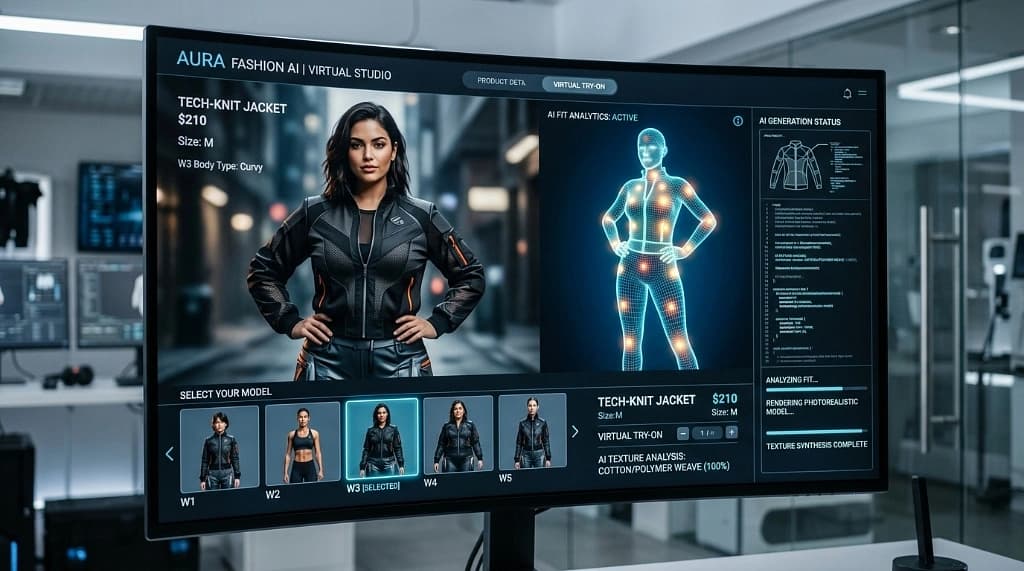
Today, several new technologies including artificial intelligence, virtual try-on systems, and video commerce are transforming the online fashion experience. Instead of relying only on static content, shoppers can now interact with garments digitally. They can see clothing on AI-generated models, preview fit through virtual try-on technology, and watch short videos showing how fabrics move and fit in real life.
These innovations are transforming garment selling into a more interactive, immersive, and personalized experience. In this guide, we explore how AI models, virtual try-on tools, and video commerce are shaping the future of fashion ecommerce.
The Evolution of Garment Selling in Ecommerce
Online fashion retail has changed significantly over the last two decades. Early ecommerce clothing stores focused primarily on product photography and sizing charts, but failed to replicate the experience of shopping in physical stores where customers can try garments instantly and feel fabric textures.
This gap between physical retail and ecommerce created challenges for fashion brands. However, advancements in artificial intelligence and digital visualization technologies are now helping retailers close this gap.
AI Fashion Models Are Transforming Product Photography
Traditional fashion photography requires significant resources like models, studios, photographers, and styling teams. Artificial intelligence is offering a more efficient alternative.
AI-generated fashion models allow brands to create realistic product imagery without traditional photoshoots. Brands can produce product images faster and experiment with different styles, poses, and model types.
Real Example: Lalaland.ai
Fashion technology company Lalaland.ai provides AI-generated fashion models specifically designed for apparel brands. Retailers can upload garment images and generate diverse digital models wearing their clothing.
Virtual Try-On Technology Is Improving Online Shopping Confidence
One of the biggest limitations of fashion ecommerce has always been the inability to try garments. Virtual try-on technology is addressing this by allowing shoppers to visualize how clothing may appear on their body using digital simulations or augmented reality.
Real Example: Walmart Virtual Try-On Technology
Retail giant Walmart introduced a virtual try-on feature that allows shoppers to see clothing items on models with different body types, helping customers understand how garments may look before purchasing.
Video Commerce Is Changing How Fashion Products Are Presented
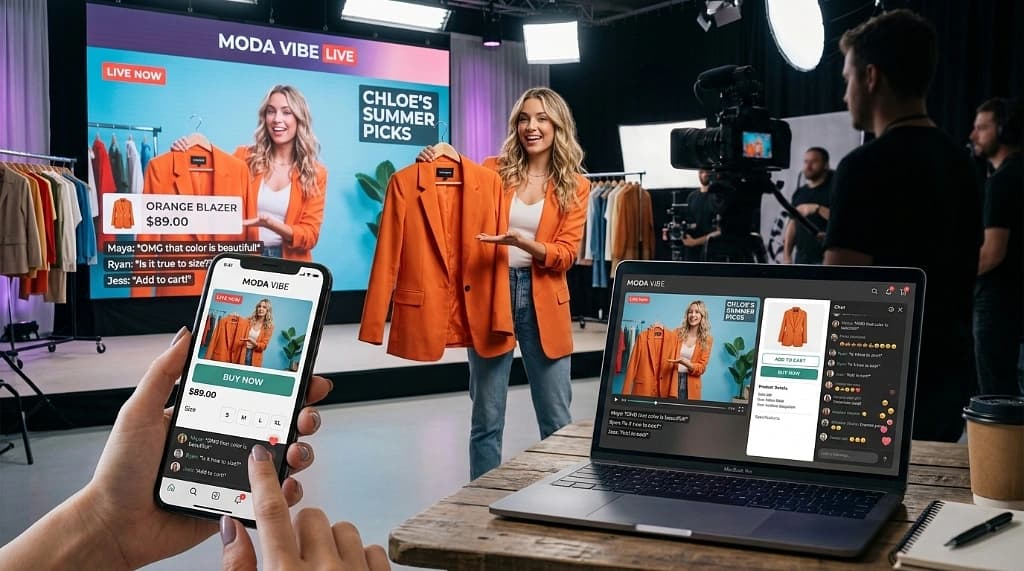
Video has become one of the most powerful formats in ecommerce. Unlike static images, video allows shoppers to see movement, fit, and texture from different angles through short product videos, live-stream shopping, or social media demonstrations.
Real Example: Live Commerce by Alibaba
Alibaba has been one of the pioneers of live-stream shopping experiences where hosts present fashion products in real time. Viewers can watch product demonstrations and purchase items directly during the broadcast.
Why These Technologies Matter for Fashion Retailers
AI models, virtual try-on, and video commerce offer several key advantages: improved customer confidence, reduced product returns, faster content production, and higher conversion rates.
The Future of Garment Selling
Fashion ecommerce is entering a new era. Future innovations will include AI-powered personal styling assistants, advanced digital body scanning, immersive virtual stores, and fully personalized clothing recommendations, narrowing the gap between online and in-store experiences.
Key Takeaways
The future of garment selling is interactive, immersive, and personalized. Brands that adopt AI models, virtual try-on, and video commerce early will gain a strong competitive advantage in the digital marketplace.