A Guide to the Best Virtual Try-On Software for Fashion Retailers
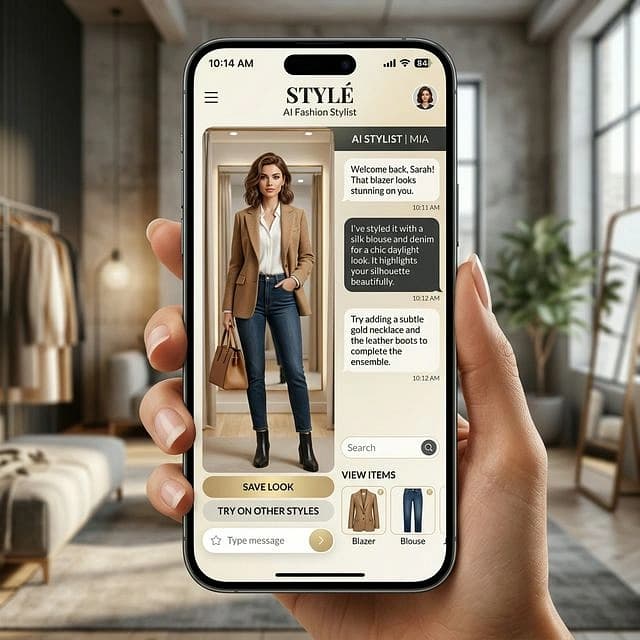
Online fashion retail has evolved dramatically over the past decade.
Consumers are now comfortable buying everything from everyday clothing to luxury fashion online. But despite these changes, one major limitation still affects the online shopping experience.
Customers cannot try clothing before buying it.
In physical stores, the fitting room plays a crucial role in helping shoppers decide whether a garment works for them. They can see how the outfit fits, how the fabric moves, and how the style looks on their body.
Online shopping removes that experience completely.
Instead of trying clothing, shoppers rely on product photos and size charts. As a result, many customers hesitate to complete their purchase.
Others buy the product but return it later if the garment does not meet their expectations.
According to research from Shopify, fashion ecommerce has one of the highest return rates among online retail categories.
To address this challenge, fashion retailers are increasingly adopting virtual try-on software.
Virtual try-on platforms allow shoppers to digitally preview clothing before purchasing. Instead of imagining how an outfit might look, customers can interact with garments through AI-powered simulations.
For fashion retailers, this technology offers a powerful opportunity to improve customer confidence, reduce return rates, and create more engaging shopping experiences.
What Is Virtual Try-On Software?
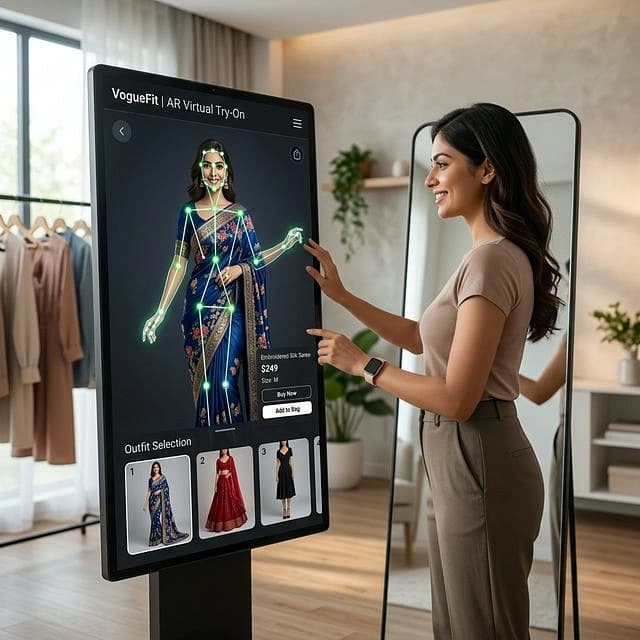
Virtual try-on software allows customers to visualize clothing digitally before making a purchase.
Instead of relying only on catalog photos, shoppers can preview garments on digital models or avatars.
Most virtual try-on platforms rely on a combination of technologies.
Artificial intelligence analyzes garment images and body structures.
Computer vision helps detect body proportions and clothing details.
3D garment simulation recreates how the outfit might appear when worn.
These technologies work together to simulate the fitting room experience digitally.
Some platforms allow shoppers to create avatars based on their body measurements.
Others allow users to upload a photo so clothing can be applied to their image.
Because of these capabilities, virtual try-on systems are often called virtual fitting rooms.
Why Virtual Try-On Technology Is Growing in Fashion Ecommerce
Online fashion retailers face several challenges that traditional stores do not.
Customers cannot physically interact with garments before buying.
They cannot feel the fabric or see how the clothing fits their body.
Virtual try-on technology addresses this gap by helping customers visualize garments more realistically.
Retailers adopt these tools for several key reasons:
- Increases Customer Confidence: Digital fitting rooms help shoppers feel more comfortable completing their purchase.
- Reduces Return Rates: Minimizes common returns caused by garments looking different on the customer than in catalog photos.
- Boosts Engagement: Interactive product pages keep customers on the site longer.
- Improves Conversion: Addresses the fit hesitation that often blocks final checkout.
A report from McKinsey highlights how generative AI and immersive shopping experiences are shaping the future of fashion retail.
Best Virtual Try-On Software for Fashion Retailers
Several technology companies are building platforms that allow fashion retailers to offer virtual try-on experiences.
Below are some of the most notable platforms being explored by fashion brands.
Style.me Virtual Fitting Room
Style.me provides a virtual fitting room platform designed for fashion ecommerce websites.
The system allows customers to create customizable digital avatars that represent their body shape.
Retailers integrate the platform into their online stores so shoppers can preview garments before purchasing.
Customers can experiment with multiple clothing styles on their avatar and compare different outfits.
Retailers that adopt avatar-based try-on systems often find that customers spend more time interacting with product pages.
Reactive Reality Virtual Dressing Room
Reactive Reality offers a virtual dressing room solution that focuses on realistic garment simulation.
The system uses artificial intelligence and 3D technology to recreate how clothing fits different body types.
Retailers integrate the platform into their ecommerce websites so customers can preview garments before purchasing.
This technology helps replicate the in-store fitting room experience in online environments.
Zyler Virtual Try-On
Zyler offers a personalized virtual try-on experience.
Instead of viewing clothing on generic models, customers can upload a photo of themselves and see garments applied to their image.
This creates a more personalized shopping experience compared to traditional catalog photos.
Retailers experimenting with personalized try-on tools often see higher customer engagement.
Lalaland.ai
Lalaland.ai focuses on AI-generated fashion models.
Retailers upload garment images and the platform generates diverse digital models to display the clothing.
This approach allows brands to present garments on different body types without organizing multiple photoshoots.
A widely discussed example occurred when Levi’s explored AI-generated fashion models using Lalaland.ai technology.
The story was reported by The Verge.
This experiment highlighted how fashion brands are exploring AI-driven product visualization tools.
Google Virtual Try-On Technology
Major technology companies are also investing heavily in virtual try-on innovation.
Google introduced an AI-powered virtual try-on feature that allows shoppers to see clothing displayed on models with different body shapes.
Instead of relying on a single catalog model, users can view how garments appear across multiple body types.
This development shows how virtual try-on technology is becoming an important part of the ecommerce ecosystem.
Realistic Example: Virtual Try-On in an Online Fashion Store
Imagine a fashion retailer selling dresses through an ecommerce store.
Without virtual try-on technology, customers browse product photos and attempt to imagine how the garment might look on their body.
Some shoppers hesitate to purchase because they are unsure about the fit.
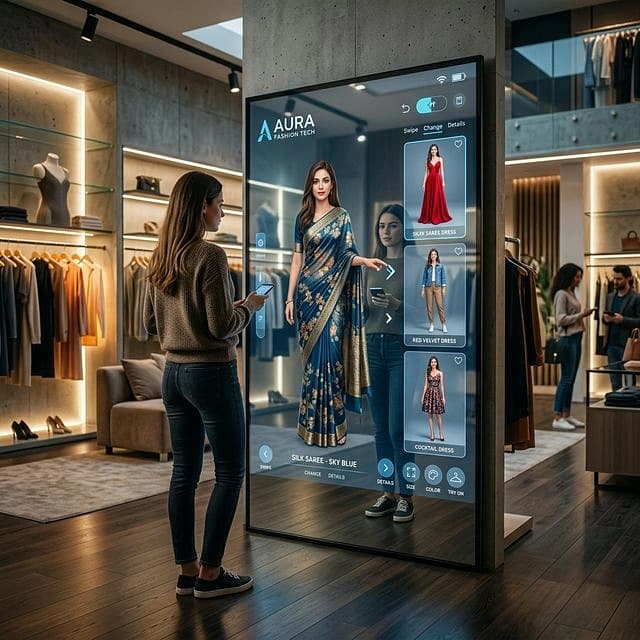
When the retailer introduces virtual try-on technology, the experience becomes far more interactive.
Customers can preview the dress on a digital model with a similar body shape.
Some systems even allow shoppers to upload their photo to generate a personalized preview.
This interactive feature helps customers visualize the garment more clearly.
As a result, shoppers feel more confident about making a purchase.
Retailers often find that these experiences increase engagement and improve conversion rates.
Future of Virtual Try-On Technology
Virtual try-on software continues evolving rapidly.
In the coming years, several improvements are expected.
Customers may be able to create highly accurate avatars using smartphone body scanning technology.
Garment simulations may replicate fabric movement and draping more realistically.
Retailers may also allow shoppers to mix and match multiple garments to preview full outfits.
As these technologies develop, virtual try-on may become a standard feature for fashion ecommerce stores.
Retailers who adopt these innovations early may gain a strong competitive advantage.
Key Takeaways for Fashion Retailers
- Interactive is the Future: Static images are no longer enough for competitive fashion ecommerce.
- Reduce Return Friction: Virtual try-on manages buyer expectations more accurately than size charts.
- Differentiate with Experience: Brands that provide immersive shopping experiences stand out.
- Scalable Implementation: Modern AI software allows even small retailers to offer high-end try-on technology.
Virtual try-on software is one of the technologies making the future of interactive fashion ecommerce possible.