AI Models: How Fashion Manufacturers and Exporters Save Time

In the fashion manufacturing industry, time is one of the most valuable resources.
Clothing brands operate on tight production timelines. Collections must be designed, manufactured, photographed, and published before seasonal deadlines. However, one stage of the process often slows everything down: traditional fashion photoshoots.
Organizing a professional photoshoot requires multiple moving parts. Brands need to hire models, coordinate photographers, book studios, prepare garments, style outfits, and complete post-production editing. Even a relatively small catalog shoot can take several days or weeks to complete.
For fashion manufacturers producing hundreds of garments, the process becomes even more complex.
This is where AI-generated fashion models are transforming the industry.
AI technology now allows clothing brands and manufacturers to generate realistic model images digitally. Instead of organizing large-scale photoshoots, brands can upload garment images and create professional catalog photos within minutes.
This shift is helping manufacturers accelerate product launches, reduce production bottlenecks, generate catalog images faster, and streamline marketing workflows.
In this comprehensive guide, you will learn how fashion manufacturers can save significant time by using AI models, how the technology works, and why many apparel companies are integrating AI-driven photography into their production pipelines.
The Time Problem in Traditional Fashion Photoshoots
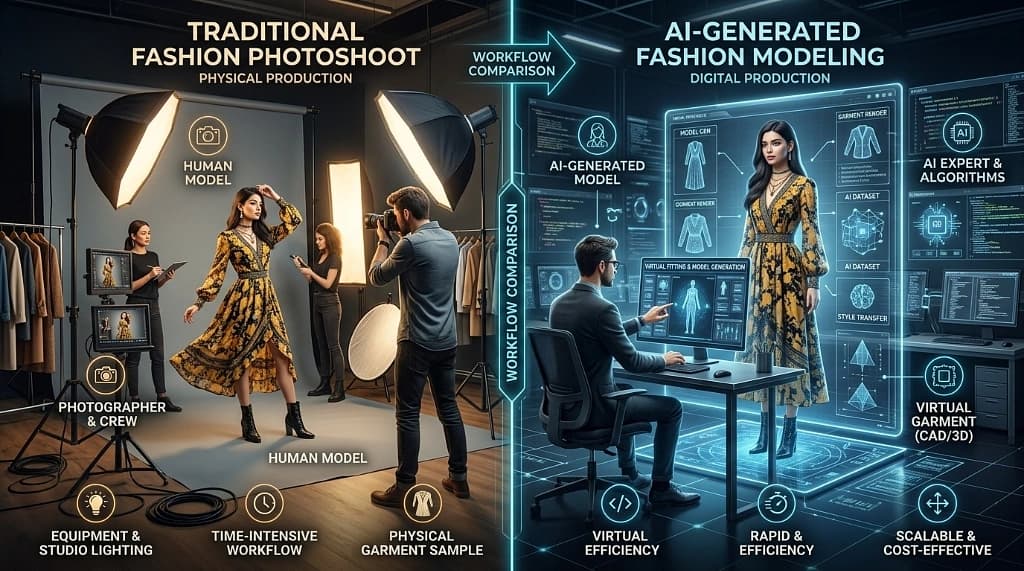
Before exploring how AI models help manufacturers save time, it is important to understand why traditional fashion photography often slows down production.
Complex Scheduling Requirements
Traditional photoshoots involve multiple stakeholders. Models, photographers, stylists, makeup artists, and studio staff must all be available at the same time. Scheduling conflicts frequently delay shoots, particularly for manufacturers producing large collections.
Studio and Equipment Setup
Professional fashion photography relies on specialized environments. Studios must be prepared with lighting systems, backdrops, camera equipment, and staging areas. For large apparel brands, this setup may take several hours before photography even begins.
Styling and Garment Preparation
Garments must be steamed, adjusted, and styled before being photographed. Although these details improve final image quality, they also significantly increase preparation time.
Post-Production Editing
After the shoot, the editing process begins. Photography teams must correct lighting, adjust color accuracy, remove wrinkles, and optimize images for e-commerce platforms. For manufacturers producing large catalogs, editing can take additional days.
What Are AI Fashion Models?
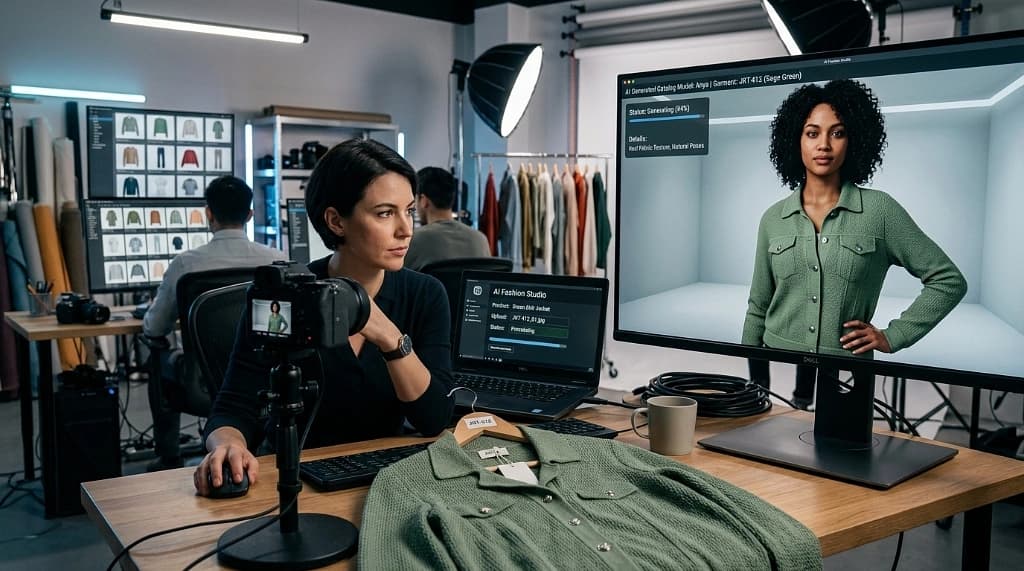
AI fashion models are computer-generated human models created using artificial intelligence technology. These models are designed to appear realistic and can wear digital representations of garments.
Instead of photographing a real person, AI systems generate images that simulate how the garment would appear on a model. This technology uses generative AI, computer vision, and clothing segmentation to map garments onto digital models.
Why AI Models Are Transforming Fashion Manufacturing
AI models address real operational challenges. Companies producing large catalogs must move quickly to keep up with seasonal demand. Delays in product photography often delay marketing campaigns and online launches.
By removing complex photoshoot logistics, AI models dramatically reduce production timelines. Manufacturers can create images at scale without coordinating studios, models, or photography teams.
Key Ways AI Models Save Time for Fashion Manufacturers
Faster Catalog Image Creation
Instead of waiting days for a photoshoot, manufacturers can generate product images almost instantly. Once a garment image is uploaded, the system can produce multiple model images in minutes.
Elimination of Model Scheduling
AI models eliminate the need to coordinate with modeling agencies. Manufacturers no longer need to review portfolios or negotiate contracts. Digital models can be generated on demand at any time.
Scalable Production for Large Collections
With traditional photography, each garment must be styled individually. AI models allow brands to scale this process, generating variations and multiple model types quickly.
Real Examples of AI Fashion Models in the Industry
Levi Strauss & Co. Exploring AI Models
Global denim brand Levi Strauss & Co. partnered with AI startup Lalaland.ai to experiment with digital models representing diverse body types. This initiative explored faster ways to create inclusive imagery.
Lalaland AI and Botika AI
Platforms like Lalaland.ai and Botika.io allow brands to generate realistic model photos suitable for e-commerce, reducing the time required for professional visuals.
How Fashion Manufacturers Use AI Models in Their Workflow
Manufacturers typically follow a four-step process: capturing basic garment images (on mannequins or flat), uploading them to an AI platform, selecting model characteristics, and generating the final fashion image.
Benefits Beyond Time Savings
AI models offer additional benefits like design experimentation, enhanced model diversity, and easier marketing localization for global markets.
The Future of AI in Fashion Manufacturing
Artificial intelligence is becoming critical in modern apparel production. As generative AI technology improves, manufacturers will be able to produce entire product campaigns digitally, gaining a strong competitive advantage.
Key Takeaways
AI fashion models provide a faster, more efficient alternative to traditional photoshoots, helping manufacturers reduce bottlenecks and accelerate product launches.