High-Quality AI Catalog Images for Lehenga Sellers: A Practical Guide
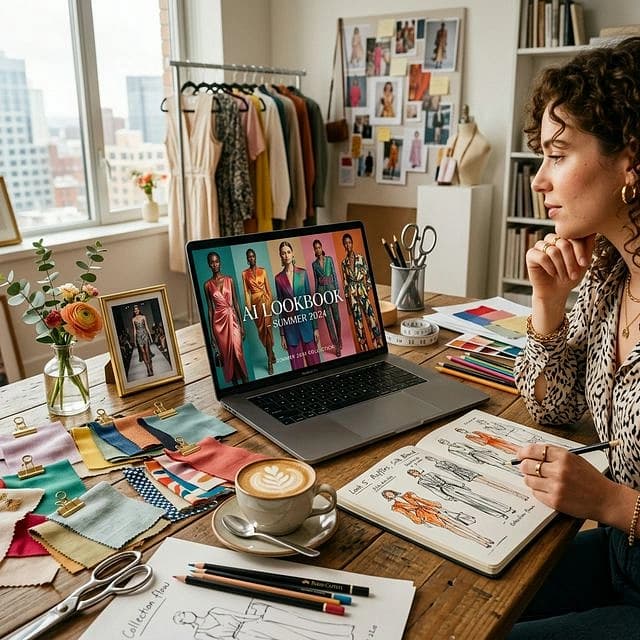
The fashion industry runs on visuals.
When customers browse a lehenga online, they cannot touch the fabric or feel the embroidery. The only thing they rely on is the catalog image.
If the images look premium, the product feels premium.
If the images look amateur, the product immediately appears less valuable.
For decades, fashion brands solved this problem with professional photoshoots.
But traditional photoshoots come with a heavy price tag.
Photographers, studio space, stylists, makeup artists, and editing teams can push the cost of a single shoot into tens of thousands of rupees.
For boutique owners and independent lehenga designers, this cost limits how frequently they can launch new collections.
Artificial intelligence is now changing that equation.
AI tools can generate studio-quality fashion catalog images within minutes — allowing small sellers to create visuals that rival large brands.
In this guide, you'll learn exactly how lehenga sellers can create premium catalog images using AI, along with real examples of how the fashion industry is already using this technology.
Why Catalog Images Decide Whether Your Lehenga Sells
When selling fashion online, images perform the job that a physical showroom normally does.
Good catalog photography communicates:
- fabric quality
- embroidery details
- garment fit
- styling inspiration
- perceived luxury
According to ecommerce research published by Shopify, strong product photography significantly improves conversion rates because it increases customer trust.
For lehenga sellers competing on Instagram, marketplaces, or ecommerce websites, premium images directly influence sales performance.
The Traditional Photoshoot Problem for Lehenga Sellers
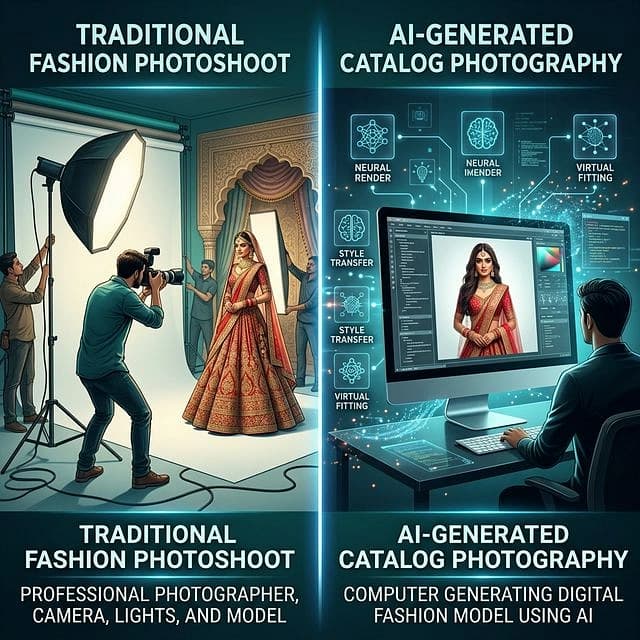
Before AI tools became available, producing catalog images required a full production setup.
A typical fashion shoot might include:
- Professional Model — ₹10,000 to ₹40,000
- Photographer — ₹15,000 to ₹50,000
- Studio Rental — ₹5,000 to ₹20,000
- Makeup Artist — ₹5,000 to ₹15,000
- Post Production Editing — ₹3,000 to ₹10,000
Even a small catalog shoot could cost over ₹1 lakh.
For boutique sellers launching collections every few weeks, repeating this process becomes financially difficult.
As a result, many sellers compromise on visuals, which ultimately affects their ability to compete online.
AI photography eliminates much of this cost.
What Is AI Fashion Photography?
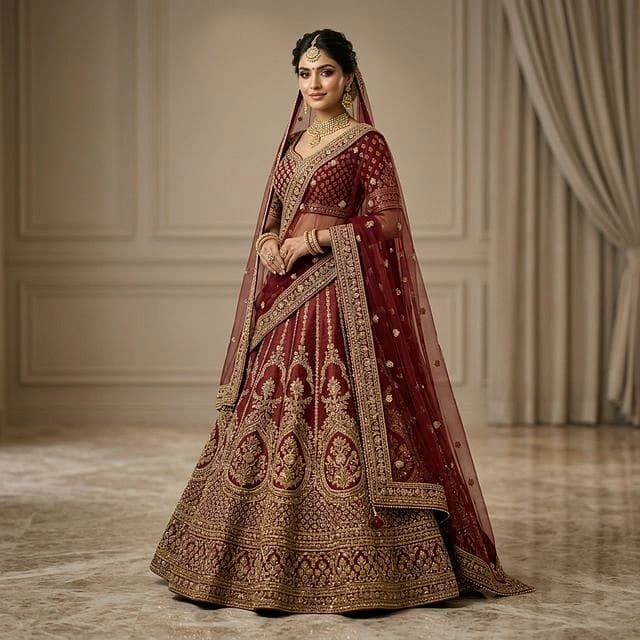
AI fashion photography uses generative artificial intelligence to simulate professional photoshoots.
Instead of photographing clothing on physical models, AI tools generate images by combining:
- garment images
- virtual fashion models
- AI generated environments
- automated lighting and styling
The output often looks indistinguishable from traditional studio photography.
The fashion industry has already started experimenting with these technologies.
For example, global denim brand Levi’s partnered with AI startup Lalaland.ai to explore using AI-generated fashion models in product imagery.
The goal was to expand representation and reduce the need for repeated photoshoots.
While major brands are experimenting with AI photography, boutique sellers can benefit even more because they typically operate with smaller budgets.
Step-by-Step: How Lehenga Sellers Can Create AI Catalog Images
Let’s break down the process.
Step 1: Capture a Clear Product Photo
The first step is taking a clean photograph of the lehenga.
You don't need expensive equipment.
A modern smartphone camera with natural lighting works well.
Best practices include:
- Use a plain background so the garment stands out.
- Ensure the lehenga is arranged neatly so the silhouette is clear.
- Avoid wrinkles and uneven lighting.
A clear product image helps AI tools understand the garment structure.
Step 2: Upload the Image to an AI Fashion Tool
Once the product photo is ready, upload it into an AI fashion image generator.
These tools analyze the garment and create catalog visuals by placing the clothing on a digital model.
One example of an AI product photography platform is Claid.ai, which focuses on generating ecommerce product images using artificial intelligence.
Platforms like this demonstrate how AI can automate much of the product photography process.
Step 3: Choose a Virtual Fashion Model
Instead of hiring a physical model, AI tools allow sellers to generate digital fashion models.
You can select models that match your brand identity.
For example:
- Bridal lehenga collections may benefit from traditional wedding styling.
- Festive collections might use vibrant celebration-inspired models.
- Designer pieces might be presented using editorial-style fashion models.
This flexibility allows sellers to test multiple visual styles quickly.
Step 4: Generate Luxury Backgrounds
One of the biggest advantages of AI fashion photography is environment generation.
AI tools can create backgrounds such as:
- royal palace interiors
- wedding stage settings
- luxury studio environments
- festive cultural settings
The AI system blends the garment, model, and lighting together to produce a realistic catalog image.
This process replicates what normally requires an entire photography team.
Step 5: Export High Resolution Catalog Images
After generating the images, sellers can download them in high resolution.
These visuals can be used across multiple marketing channels.
Examples include:
- Shopify or WooCommerce product pages
- Instagram product posts
- WhatsApp product catalogs
- fashion marketplace listings
- advertising creatives
This dramatically speeds up the process of launching new collections.
Real Example: How AI Is Already Being Used in Fashion
AI photography is not just theoretical.
Fashion companies are actively exploring it.
For example, fashion brand Mango has experimented with AI-generated visuals for marketing campaigns.
This shows how brands are using AI to accelerate content production while reducing creative costs.
For boutique sellers, the implications are significant.
If global fashion brands can integrate AI into their creative process, smaller sellers can adopt similar tools to produce high-quality catalogs without expensive shoots.
Another Example: AI Generated Product Images in Ecommerce
AI photography is also gaining traction in ecommerce product imaging beyond fashion.
For example, ecommerce platforms increasingly use AI-generated product visuals to improve listing quality.
A detailed discussion of this trend can be found in this article by TechCrunch:
The article explains how generative AI tools are beginning to automate parts of fashion photography.
This growing adoption signals that AI catalog creation is not just a temporary trend.
It is likely to become a core part of ecommerce production workflows.
Benefits of AI Catalog Images for Lehenga Sellers
- Massive Cost Reduction: Save up to 90% compared to traditional studio production and talent fees.
- Same-Day Turnaround: Generate and publish your catalog visuals as soon as you have your product samples.
- Visual Consistency: Maintain a uniform look with identical lighting and model styling across your entire store.
- Creative Freedom: Experiment with royal palaces, luxury gardens, or high-end studio backgrounds at no extra cost.
- Scalability: Easily produce diverse model shots to appeal to a wider range of customer demographics.
The Future of AI Catalog Photography
Artificial intelligence is becoming deeply integrated into the fashion industry.
According to a report by McKinsey, generative AI has the potential to add significant value to fashion businesses through automation and creative production tools.
As AI tools continue improving, they will likely become standard tools for catalog production.
For boutique lehenga sellers, this represents a powerful opportunity.
By adopting AI photography early, sellers can produce high-quality catalogs faster and more affordably than competitors relying on traditional photoshoots.
Key Takeaways
- Visuals are Your Storefront: In lehenga retail, the quality of your image is as important as the quality of your thread.
- AI Equals Speed: Use AI to bridge the gap between creation and sales by eliminating photography bottlenecks.
- Quality is Non-Negotiable: Ensure your AI tools generate high-resolution textures that accurately represent your craftsmanship.
- Future-Proof Your Boutique: Start integrating AI workflows today to stay ahead of bigger brands with larger budgets.